Module's Selected Major Components
Module's Selected Major Components
The final major components chosen to establish dependable wireless communication for the Subterranian Rover are described in the following sections. These components meet the embedded system’s surface-mount design requirements and power constraints while enabling reliable WiFi communication between the rover electronics and the external control station. The selected components support wireless data transmission using MQTT over WiFi, provide system power regulation, and include user interface indicators for system status and diagnostics.
Power Management
3.3V Switching Voltage Regulator
-
Buck Switching Regulator IC Positive Fixed 3.3V (Surface-Mount) LM3671MF-3.3/NOPB

- $1.98/each
- link to product
Pros Cons High efficiency ( about greater than 90%) improves power efficiency and reduces heat generation Switching noise requires careful PCB layout Handles ESP32 peak current during WiFi bursts Requires inductor and external passives Wide input voltage range supports battery input More complex than Linear regulators Surface-mount compatible
LM2576HVS-ADJ/NOPB

- $8.48 / each
- link to product
| Pros | Cons |
|---|---|
| Simple and reliable switching regulator design | Larger package compared to compact regulator |
| HIgh current capability (up to 3A output) | Higher cost than some alternatives |
| Requires relatively few external component | Lower efficiency than newer regulators |
| Well-documented and widely used in power supply designs | LArger PCB footprint |
TPS62162 Buck Switching Regulator

- $2.30 / each
- link to product
| Pros | Cons |
|---|---|
| High efficiency | Slightly higher cost |
| Good load transient response | Requires additional external components |
| Compact surface mount package |
Final Choice: LM2576HVS-ADJ/NOPB
Rationale: The LM2576HVS-ADJ/NOPB was selected because of its high current capability, simple implementation, and proven reliability in power supply designs. While some modern regulators offer higher efficiency and smaller packages, the LM2576 provides stable voltage regulation with fewer design complications, making it easier to integrate into the rover system. Its ability to handle higher currents ensures the regulator can reliably power the ESP32 and other electronics during peak load conditions, which is critical for maintaining stable operation of the rover's communication and control systems.
For more details, review the Appendix-Component Selection Process-Power Management
Power Source
Battery
-
18650 Lithium-Ion Battery
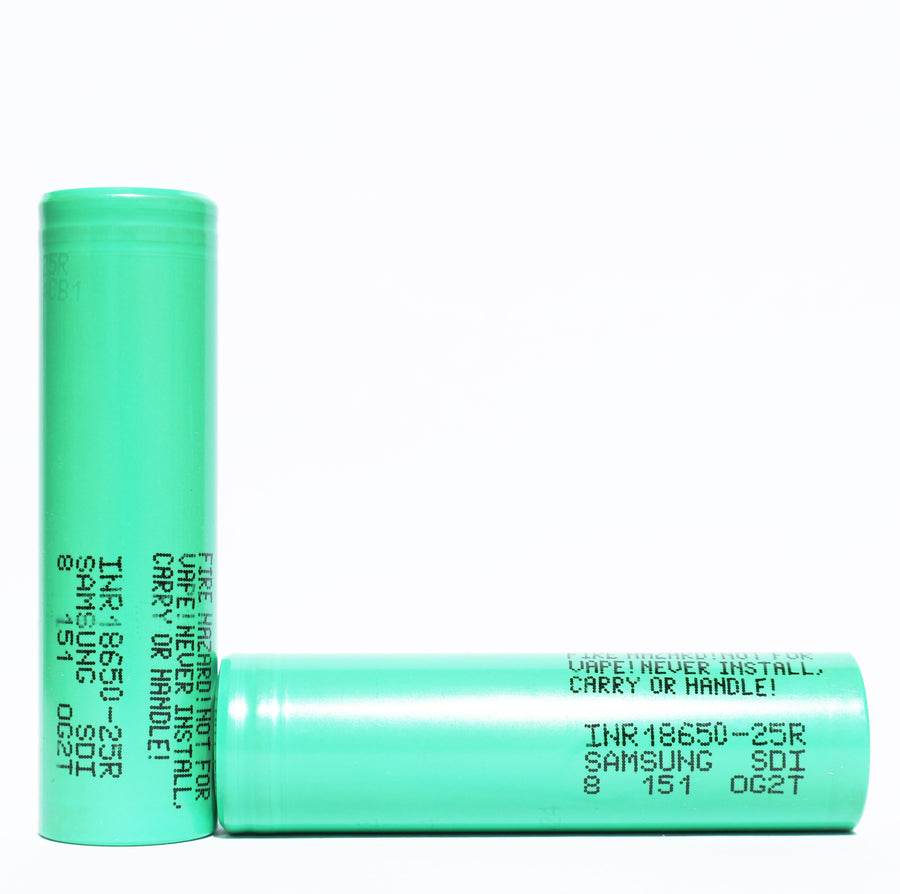
-
$4.99 / each
- link to product
| Pros | Cons |
|---|---|
| High energy density | Requires charging circuitry |
| Rechargeable | Safety considerations |
- LiPo Battery Pack (3.7V)

- $14.95/each
- Link of Product
| Pros | Cons |
|---|---|
| Lightweight | Shorter lifespan |
| Rechargeable | Requires protection circuitry |
| Compact | Higher cost |
Final Choice: 18650 Lithium-Ion Battery
Rationale: The 18650 lithium-ion battery provides high energy density, rechargeable operation, and sufficient current capacity to support the ESP32 and other electronics. This makes it well suited for portable embedded systems such as the subterranean rover.
Wifi + Bluetooth
Wifi + Bluetooth Module
-
ESP32-S3-WROOM-1-N4 (Surface-Mount RF Module)

- $5.06/each
- link to product
Pros Cons Integrated Wifi and Bluetooth connectivity High current draw during wifi transmission Large software ecosystem and community support RF performance depends on antenna layout Multiple GPIO pins for LEDs, sensors, and control Requires careful RF PCB layout Supports UART communication with rover controller More complex firmware than the simple radios -
ESP8266 (4MB Flash)

- $7.50/each
- Link of Product
| Pros | Cons |
|---|---|
| Low cost | No Bluetooth |
| Large community support | Lower processing power |
| Simple WiFi connectivity | Fewer peripherals |
- NRF52840 Module

- $7.00 / each
- Link to Product
| Pros | Cons |
|---|---|
| Low power wireless | Higher cost |
| Bluetooth support | No integrated WiFi |
| Good documentation | Smaller ecosystem |
Final Choice: ESP32-S3-WROOM-1-N4
Rationale: The ESP32-S3-WROOM-1-N4 module was selected because it integrates WiFi connectivity, processing capability, and multiple communication interfaces into a single surface-mount module, reducing PCB complexity. The module supports UART communication with the rover controller and WiFi communication with the MQTT server, allowing real-time telemetry transmission and command reception. Its extensive software ecosystem and development tools significantly reduce development risk.
For more details, review the Appendix-Component Selection Process- Wifi+Bluetooth Module
Communication Interface
Digital Serial Communication Connection
-
Custom connector interface to rover controller/ laptop
Pros Cons Simple and reliable serial communication Requires additional pins Compatible with both ESP32 and PIC microcontrollers Limited communication distance Low hardware complexity
Rationale: UART was selected as the communication interface between the wireless subsystem and the rover controller board. This protocol is widely supported by embedded systems and provides simple bidirectional communication using only two signal lines (TX and RX). It is ideal for transmitting telemetry data and receiving control commands from other rover subsystems.